Choosing Personal Protective Equipment For Construction is not a matter of ordering helmets, gloves, and safety boots from a catalog. It begins with understanding the work. A demolition crew faces falling masonry, silica dust, sharp edges, and sudden noise. A roofing worker may need slip-resistant footwear, eye protection, gloves, and fall-arrest equipment. Each hazard demands a specific response.
Dr. John Howard, former director of the National Institute for Occupational Safety and Health, has emphasized, “PPE is not a substitute for hazard control; it is part of a layered prevention strategy.” That principle should guide every selection decision. Employers must examine the task, identify exposure routes, and choose equipment that matches the actual risk. A respirator that fits poorly offers false confidence. So does a cracked face shield.
Fit matters greatly. Comfort matters too. Workers often remove equipment that fogs, pinches, overheats, or restricts movement. Small details can decide whether protection stays in place beside a vibrating saw. Workers should test PPE before the shift begins. Their practical feedback can reveal problems that a written assessment misses.
Inspection is easy to underestimate. Straps stretch. Soles wear down. Filters expire. A damaged item should leave the work area immediately. Not later.
Training must cover fitting, cleaning, storage, replacement, and emergency use. Supervisors should observe real behavior, not only completed forms. Some selections will need revision after changing weather, materials, or work methods. That is not failure. It is responsible safety management. The strongest PPE program remains alert, evidence-based, and willing to question its own assumptions.
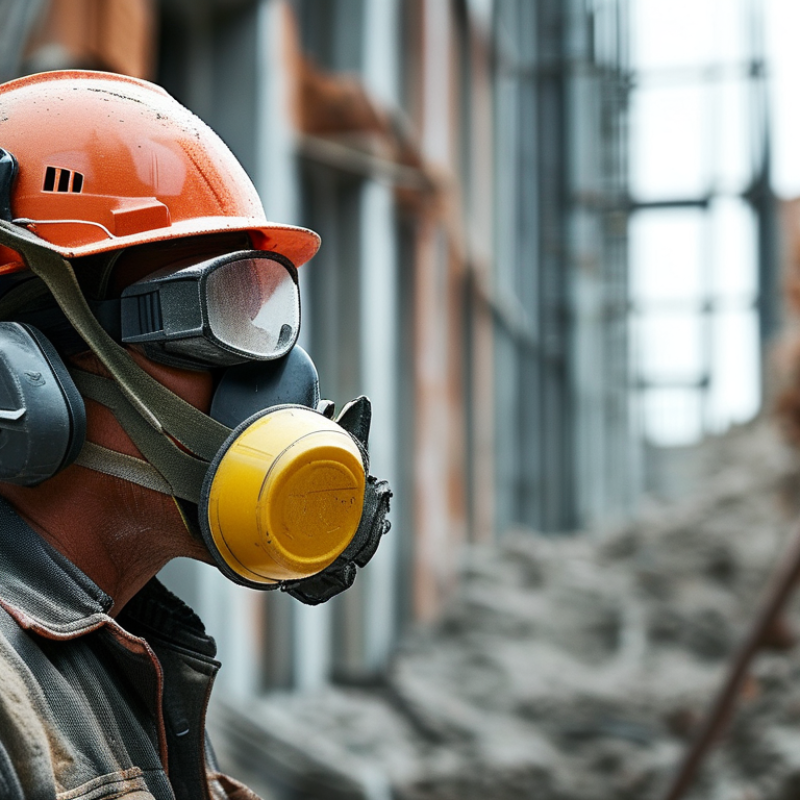
Assess Construction Hazards Under OSHA 29 CFR 1926.95 Before Choosing PPE
How to Choose Personal Protective Equipment for Construction
Assess Construction Hazards Under OSHA 29 CFR 1926.95 Before Choosing PPE
PPE selection should begin with the work, not a shopping list. Under OSHA 29 CFR 1926.95, employers must identify hazards that could cause injury and provide suitable protection. Walk through each task and observe the details: a grinder throwing metal sparks, loose debris falling from scaffolding, or concrete dust collecting around a worker’s face.
Record the hazard, its source, and the body area exposed. Check for impact, penetration, harmful dust, noise, heat, chemicals, and electrical contact. A hard hat may address falling objects, but it cannot protect eyes from fine particles. Safety glasses, face protection, gloves, hearing protection, protective footwear, or respiratory equipment may be needed together. PPE must fit the worker and remain reliable, clean, and sanitary. Damaged equipment should not stay in service.
A useful assessment includes workers who perform the task daily. They often notice sharp edges, awkward lifting, or poor visibility that a form misses. Review the assessment when tools, materials, weather, or procedures change. Training should cover fitting, limitations, inspection, storage, and replacement. A rushed inspection can overlook a cracked lens or worn glove. That is a real weakness. Recheck the equipment before the shift starts, especially after rain, heavy dust, or repeated impact.
Select Head, Eye, and Hearing PPE Using ANSI Standards and the 85 dBA Limit
Choosing construction PPE starts with the hazard, not the equipment cabinet. A hard hat should match the site’s risks and meet the current ANSI/ISEA Z89.1 requirements. Check its class, impact rating, suspension, and date of manufacture. It must sit securely without touching the shell. Eye protection should meet ANSI/ISEA Z87.1 and include side protection when debris can enter from an angle. Clear lenses suit indoor work, while shaded lenses support outdoor light control. Scratched lenses are not a minor issue. They can hide a flying fragment.
Hearing protection requires a measured approach. In the United States, 85 dBA over an eight-hour time-weighted average is an action level, not a universal legal limit. Use a sound-level meter or personal dosimeter near grinders, impact tools, and compressors. Select protectors using their tested attenuation, including relevant ANSI/ASA methods, and confirm a practical fit. Earplugs need clean hands and full insertion. Earmuffs need an even seal around glasses, hair, and helmet straps. Double protection may help during extreme noise, but it is not automatically comfortable or effective. I have seen workers choose the highest rating and wear the plugs poorly. That choice needs reconsideration. Check PPE before each shift, replace damaged parts, and document training, fit checks, and exposure readings.
How to Choose Personal Protective Equipment for Construction
Select head, eye, and hearing PPE using ANSI standards and the 85 dBA limit.
Chart interpretation: 85 dBA is OSHA’s 8-hour action level for hearing conservation. The exposure durations shown at 90–115 dBA follow OSHA’s permissible exposure table and use a 5 dB exchange rate. Noise above the action level requires exposure assessment and may require hearing protection and a hearing conservation program.
Head Protection
Select a hard hat marked to ANSI/ISEA Z89.1 and matched to the site hazards, such as impact, penetration, electrical exposure, and chin-strap requirements.
Eye Protection
Use safety eyewear marked to ANSI/ISEA Z87.1. Choose protection for impact, dust, chemicals, radiation, or face-level splash hazards identified in the assessment.
Hearing Protection
When noise exposure reaches the action level, use a hearing conservation approach and select suitable earplugs or earmuffs based on measured exposure and attenuation information.
Choose NIOSH-Approved Respirators Using OSHA Assigned Protection Factors
Respirator selection begins with the hazard, concentration, and required protection level. NIOSH approval confirms that a respirator passed performance testing for its stated configuration. It does not fit every worker or task. OSHA’s Table 1 in 29 CFR 1910.134 lists an assigned protection factor (APF) of 10 for half-mask air-purifying respirators. It lists 50 for full-facepiece air-purifying respirators. The maximum use concentration equals the APF multiplied by the exposure limit. Never use that calculation for an immediately dangerous atmosphere. NIOSH’s Respirator Selection Logic supports checking exposure data before choosing equipment.
For respirable crystalline silica, OSHA sets a permissible exposure limit of 50 micrograms per cubic meter over eight hours. The action level is 25 micrograms. At a concrete-cutting station, dust can settle on a worker’s eyelashes, face seal, and clothing within minutes. A higher APF is not automatically safer. A poor seal defeats a carefully chosen number. OSHA requires fit testing before initial use, after relevant facepiece changes, and at least annually. Facial hair across the sealing area can invalidate the test. Workers should perform a seal check every time they don the respirator. Replace filters according to the written respiratory protection program, not simply when breathing feels difficult. Comfort matters, but it should not control the decision. That is an easy mistake. A competent person should review monitoring results, task duration, heat, communication needs, and medical clearance before approval.
Use Fall Protection at 6 Feet with 5,000-Pound Anchorage Capacity
How to Choose Personal Protective Equipment for Construction
A six-foot fall can cause severe injury before a worker can react. On construction sites, fall protection should begin whenever the work area creates this exposure. Select a properly fitted full-body harness, a compatible connector, and an approved anchorage. The anchorage should support at least 5,000 pounds per attached worker, unless a qualified person designs an equivalent system under applicable requirements. Do not trust a convenient pipe, guardrail, or temporary brace.
I have seen workers choose equipment by comfort alone. That choice can fail when the lanyard is too long or the harness sits loose. Measure the fall clearance below the work surface, including lanyard deployment, worker height, and harness stretch. Keep connectors away from sharp edges and use a suitable system for leading-edge work. Check labels, stitching, buckles, snap hooks, and energy absorbers before every shift. Small cuts matter.
A rescue plan belongs beside the equipment. After a fall, a suspended worker may face serious harm while waiting for help. Keep rescue tools accessible, identify trained rescuers, and practice the procedure with the crew. Weather changes can also affect footing and visibility. Recheck the setup after moving platforms or changing anchor points. I have missed details during rushed inspections, so a second-person check is worth the extra minute. Survivor reports often reveal weaknesses that paperwork misses.
Confirm PPE Fit, Training, Inspection, and Annual Respirator Fit Testing
How to Choose Personal Protective Equipment for Construction
Confirm PPE fit before work begins, not after discomfort appears. A hard hat should sit securely without sliding when the worker bends. Safety glasses must seal comfortably around the eyes without blocking vision. Gloves should allow firm tool control, while safety footwear needs stable soles and enough toe room. A loose harness can shift during a fall, so each strap requires careful adjustment.
Training should include demonstrations, practice, and direct questions. Workers need to know when PPE is required, how to put it on, and when to replace it. For tight-fitting respirators, training must cover facial hair, seal checks, cleaning, storage, and breathing resistance. A user seal check helps detect obvious problems. It does not replace a formal fit test. Annual respirator fit testing should be documented for each approved model and size. Repeat testing is also important after major facial changes, significant weight changes, or a different respirator design.
Inspect PPE before every use. Look for cracked lenses, torn straps, worn soles, damaged buckles, and clogged filters. Remove questionable equipment from service immediately. Keep inspection records where supervisors can review them. I have seen workers focus on visible damage while missing stretched elastic or poor adjustment. That habit needs correction. Comfort can also mislead. Equipment may feel acceptable while reducing protection. A short fitting check at the work area often reveals pressure points, fogging, or restricted movement before a task becomes hazardous.
FAQS
: Start with the hazard, measured concentration, and required protection level. Choose an approved respirator for the complete configuration. Approval confirms testing, not personal fit. Do not rely on comfort alone.
A half-mask model has an assigned protection factor of 10. A full-facepiece model has an assigned protection factor of 50. The maximum use concentration equals the protection factor multiplied by the exposure limit. Do not use this calculation for extremely dangerous atmospheres.
The eight-hour exposure limit is 50 micrograms per cubic meter. The action level is 25 micrograms per cubic meter. During concrete cutting, dust may settle on eyelashes, clothing, and face seals quickly. Higher protection is not always safer. A poor seal defeats the calculation.
Complete fit testing before initial use. Repeat it at least annually. Repeat testing after facepiece changes, major facial changes, or significant weight changes. Facial hair across the sealing area can invalidate the test. Check the seal every time.
Follow the written respiratory protection program. Do not wait until breathing feels difficult. Inspect filters, straps, and seals before use. A clogged filter is only one possible warning sign. That is easy to miss.
Use fall protection when work creates a six-foot fall exposure. Select a fitted full-body harness and compatible connectors. Use an approved anchorage for the complete system. Each anchorage should support at least 5,000 pounds per attached worker, unless properly designed otherwise. Never trust a nearby pipe.
Inspect harness stitching, buckles, labels, snap hooks, and energy absorbers before every shift. Check for cuts, stretched webbing, damaged connectors, and loose adjustments. Measure clearance below the work surface. Include deployment distance, worker height, and harness stretch. Small cuts matter.
Training should include demonstrations, practice, and direct questions. Workers should know when PPE is required and when replacement is necessary. Check hard hats, glasses, gloves, footwear, harnesses, and respirators before work. Remove questionable equipment immediately. A second-person check helps.
Conclusion
Choosing Personal Protective Equipment For Construction begins with a careful assessment of workplace hazards under OSHA 29 CFR 1926.95. Employers should identify risks from falling objects, flying particles, excessive noise, respiratory contaminants, and elevated work areas before selecting suitable equipment. Head protection, eye and face protection, and hearing protection should meet applicable ANSI standards, with hearing controls considered when noise reaches or exceeds 85 dBA.
Respiratory protection should be NIOSH-approved and selected according to the hazard and OSHA-assigned protection factors. Where workers may fall six feet or more, appropriate fall protection must be provided, with anchorage systems capable of supporting 5,000 pounds per worker or meeting an approved alternative. Every item must fit correctly, remain in good condition, and be inspected regularly. Workers also need practical training on use, limitations, cleaning, storage, and replacement. Respirator users require medical evaluation and fit testing before use, followed by fit testing at least annually.

 GoPro Safety